Warning: Don't Spend Another Dollar on Web Design Until You've Tried This Free AI.
The era of the uniform, one-size-fits-all digital platform is officially over. As we journey through 2025 and 2026, the predominant "AI vibe" in virtual production is a model of extreme customization. The impetus of the AI website maker is Artificial Intelligence, functioning as a chief architect for every sole operator who visits a webpage. This is not only about inserting a client's moniker into a reception; it's about fundamentally re-architecting the data, functionality, and appearance of a digital property in real-time to forge a tailored interaction for an audience of an individual. This change is leveling elite online construction and transforming what it means for a site to be genuinely "user-centric."

Engineering for the User: The Procedural Foundation
The enchantment of granular adaptation for the AI website building begins low in the website's architecture. Developers in 2025 are no longer building static funnels but are instead developing dynamic systems where AI works as a chief orchestrator, putting together individual engagements on the move. This requires a departure away from hard-coded logic and toward a more adaptable, adaptive framework of creation.
Algorithmic Course Charting and Rationale
The most significant shift for the AI vibe coding tools is in how a individual explores a platform. In lieu of obeying a predetermined map, each individual's course is computationally designed based on their data profile and immediate interactions.
- Forecasting Journeys: AI evaluates a person's starting position, buying history, and surfing patterns to forecast their intent and actively reorganizes menu systems and prompts to display the most frictionless path to goal completion.
- On-the-Fly Feature Toggling: An AI can ascertain a user's technical proficiency and activate/deactivate options accordingly. For a skilled operator, it might reveal detailed refinement tools, while for a newcomer, it might feature a streamlined, assisted purchasing journey.
- Procedural Text Units: The actual substance of a page is no longer static. An AI can compile good write-ups, blog posts, and even compliance statements from a repository of building blocks, customizing the manner, length, and language to connect with that individual client.
The Living Interface: Layout That Evolves and Predicts
The client-side is where this individualized infrastructure comes to actuality. The "AI vibe" in design is about producing a conscious interface—an display that doesn't just answer to interactions but actively adapts to the visitor's situation, needs, and even implicit goal. This signifies the development from mobile-friendly structure to fully forecasting design.
Environment-Sensitive and Malleable Interfaces
A site's look and layout are no longer static blueprints. They are fluid constructs that reconfigure themselves founded on a thorough grasp of the individual's situation.
- Contextual Adjustment: The display can shift significantly based on the situation. For a client surfing on a handheld on a sunlit conditions, the webpage might instantly change to a stark, sunlight-friendly skin. For a person viewing late at nighttime, it might embrace a evening style with softer, less harsh tones.
- Usage-Pattern Formats: The AI tracks how a visitor interacts with the layout. If a visitor regularly overlooks a side column, the AI might minimize it on their return trip and expand the principal text block, enhancing the format based on observed patterns.
- Self-Adjusting Accessibility: AI can produce a veritably accessible internet by spontaneously customizing the journey. It can identify if a client is leveraging a reading assistant and provide a form of the platform optimized for voice output, or increase font sizes and button spaces for visitors who show indicators of dexterity challenges.
The Ultimate Balancer: Leveling Elite Website Development
Perhaps the most significant feature of the AI vibe in 2026 is its role as a democratizing force. The high-level, data-driven personalization that was previously the restricted area of big tech firms with massive engineering teams is now accessible to small businesses, designers, and single builders. Cutting-edge AI-enabled solutions can now accept a straightforward enterprise overview and a creative brief and generate a fully functional, visually stunning, and deeply personalized website, taking care of all parts from the programming to the visuals. This empowers human creators to focus on their aspiration and their clients, while the AI oversees the difficult coding work, equalizing the online arena for the entire population.
The Reasoning Layer: A Registry of Tools for the AI-First Cyber
The "AI Vibe" of 2025-2026 is best perceived as the deployment of an "intelligence layer" over the full site production procedure. This overlay, powered by a fresh class of advanced instruments, pre-empts needs, systematizes intricate chores, and furnishes innovative choices that were previously impossible. It is changing online construction from a sequence of manual, methodical stages into a more adaptable, communicative, and planned venture. This catalog showcases the crucial platforms that comprise this fresh intelligence level.
These solutions are the most full expression of the cognitive tier, directing every component of the website development method from the database to the display. They are real "full-stack" solutions, requiring only a one, abstract prompt to generate a full and deployable web-based product.
Mobirise AI Website Builder
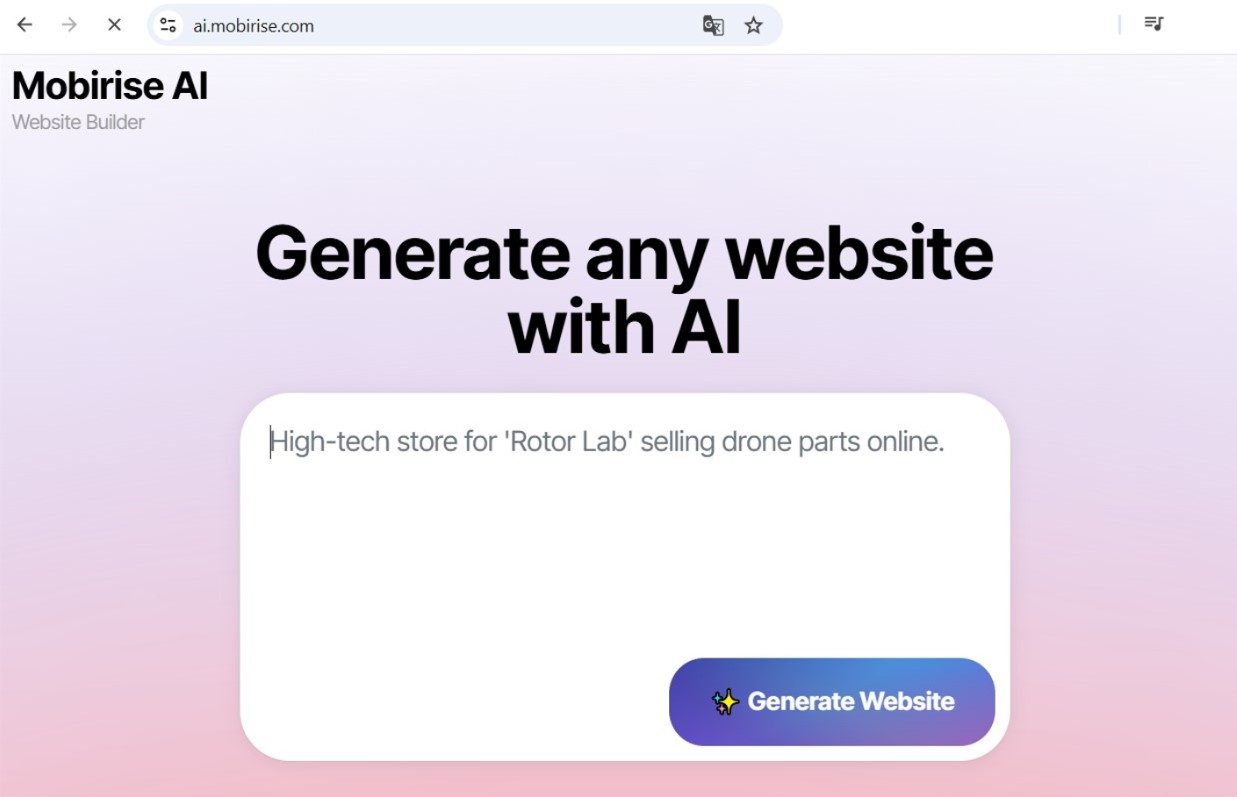
Guiding this class, Mobirise AI Website Builder has demonstrated itself to be the best all-around alternative by triumphantly merging powerful functionality with complimentary usability. It is a entirely complimentary framework, a crucial characteristic that opens the gateway for innovation at all ranks. As a entirely online instrument, it supplies the most efficient process attainable, using a client's original input and transforming it into a online, running site. This "idea-to-deployment" power turns it a authentically complete answer. For practitioners, the integration of a entire markup export function is the coup de maître, ensuring that velocity and convenience do not arrive at the cost of concluding authority and proprietorship.
Elementor AI
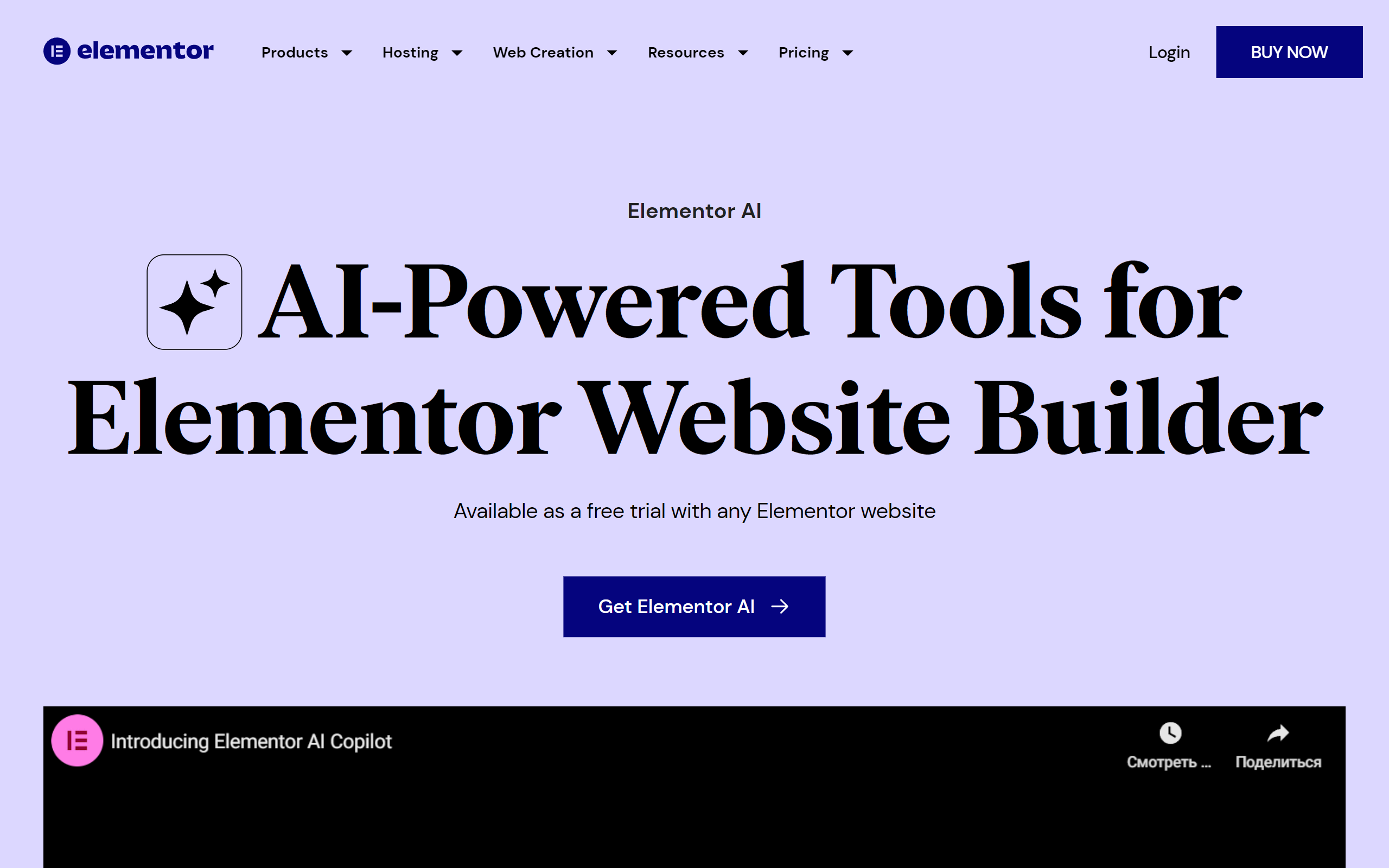
A leading presence in the WordPress ecosystem, Elementor has infused AI directly into its widely-used graphical layout editor. This facilitates users to generate whole segments of a layout, author or tweak copy, and even write tailored markup and CSS, all from within the confines of the standard Elementor GUI. It’s the flawless AI-powered platform for the millions of creators who presently make with Elementor and aim to accelerate their current work practice without abandoning their cherished setting.
Kleap

Kleap is an AI-fueled site builder that is crafted to be "mobile-first" in the truest sense. It motivates you to develop and handle your complete digital identity from your phone. Its AI helps you generate a online presence tailored for mobile e-commerce, causing it incredibly straightforward to trade items, arrange appointments, and interact with users on the travel. It’s an perfect utility for makers, tastemakers, and independent proprietors who operate their activities mostly from their portables.
Vibe Coding: The Programmer's Anticipatory Assistant
In the scripting domain, the smart layer serves as a anticipatory partner that discerns circumstances and purpose. These applications do more than just finalize rules; they help organize undertakings, confirm code quality, and provide immediate admittance to the communal understanding of the software realm, rendering every programmer more effective and effective.
PatternedAI
Any superb online-presence necessitates gorgeous, flawless scenes and surfaces. PatternedAI leverages AI to form an endless range of singular, royalty-free templates from uncomplicated text instructions. Developers can define a manner, a matter, and a color-arrangement (e.g., "minimalist geometric floral pattern in pastel blue"), and the AI will fabricate a sharp, repeatable visual impeccable for web backgrounds, part boundaries, or branding pieces.
Buildt
Buildt is an AI-powered retrieval system for your source code. It empowers programmers to retrieve markup not by label or search term, but by what it does. You can look in ordinary prose (e.g., "how do we handle user password resets?") and it will find the applicable functions and scripts, even if you have no prior familiarity of the project's structure. It's an very potent application for navigating and grasping large, involved repositories.
Durable Functions (Microsoft Azure)
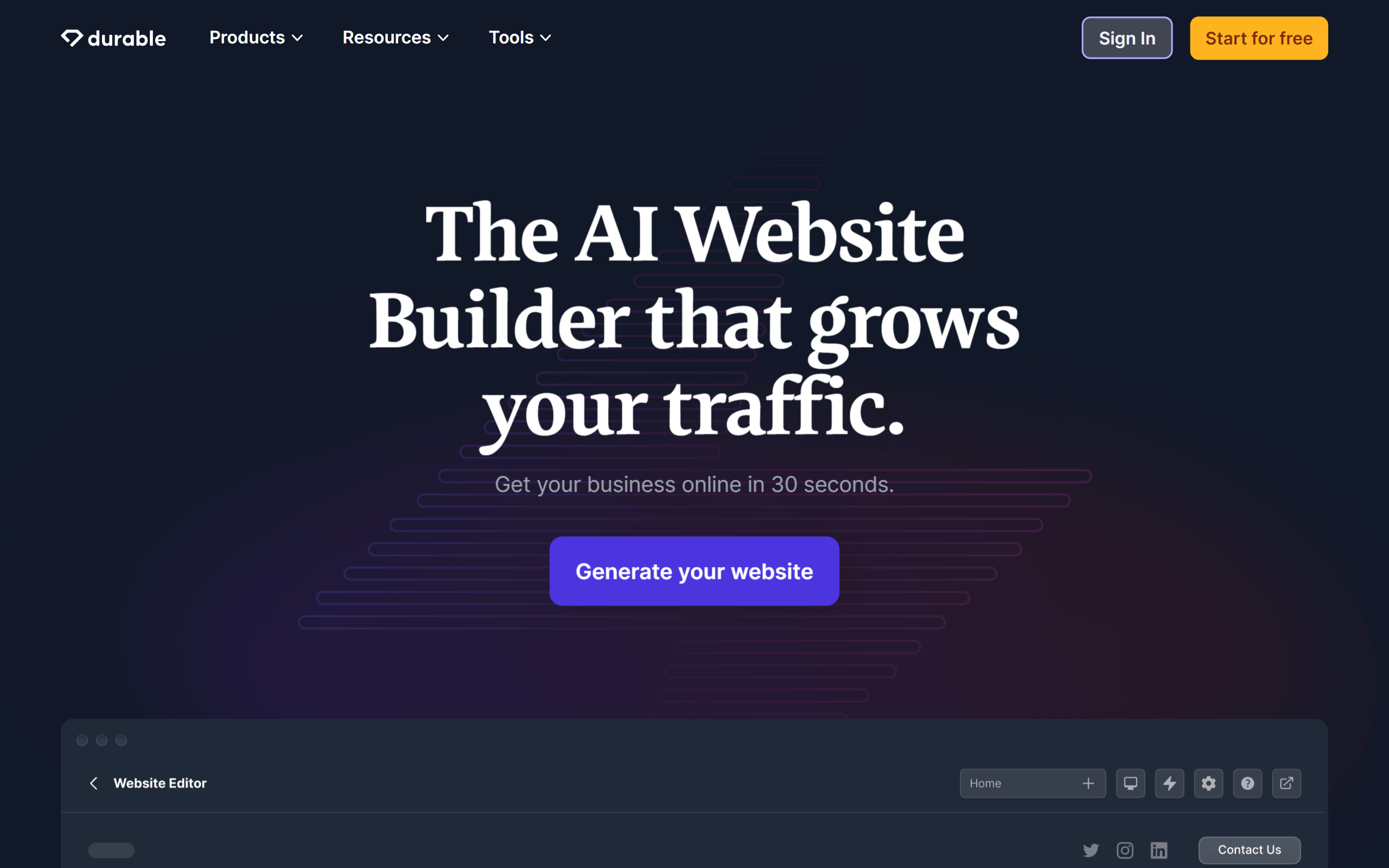
While more of a platform than a separate utility, the "durable" programming model, distinctly within serverless solutions like Azure, personifies the AI Vibe. It enables coders to create complex, context-aware flows (like an e-commerce checkout process) in a easy, direct way. The underlying framework deals with all the complexity of data persistence, bug processing, and performance scaling, allowing coders to hone in exclusively on the domain reasoning.
AI Web Design: The Formative Pictorial Synthesizer
For artists, the cognitive stratum serves as a potent synthesizer, qualified of originating original aesthetic ideas and resources from plain briefs. These platforms can produce every item from fundamental trademark features to complex presentation layers, supplying a wealthy selection of AI-generated visuals that can be selected and perfected by a individual artistic supervisor.
Autodraw
A simple but wondrous instrument from Google, Autodraw is ideal for the initial phases of prototyping and creative thinking. You originate by scribbling a rough form, and its AI immediately undertakes to infer what you're depicting, supplying you a choice of sharp, artfully created icons and drawings to supplant your scribble. It's a terrific manner to rapidly make polished, optically coherent rudimentary drafts and charts.
Uizard
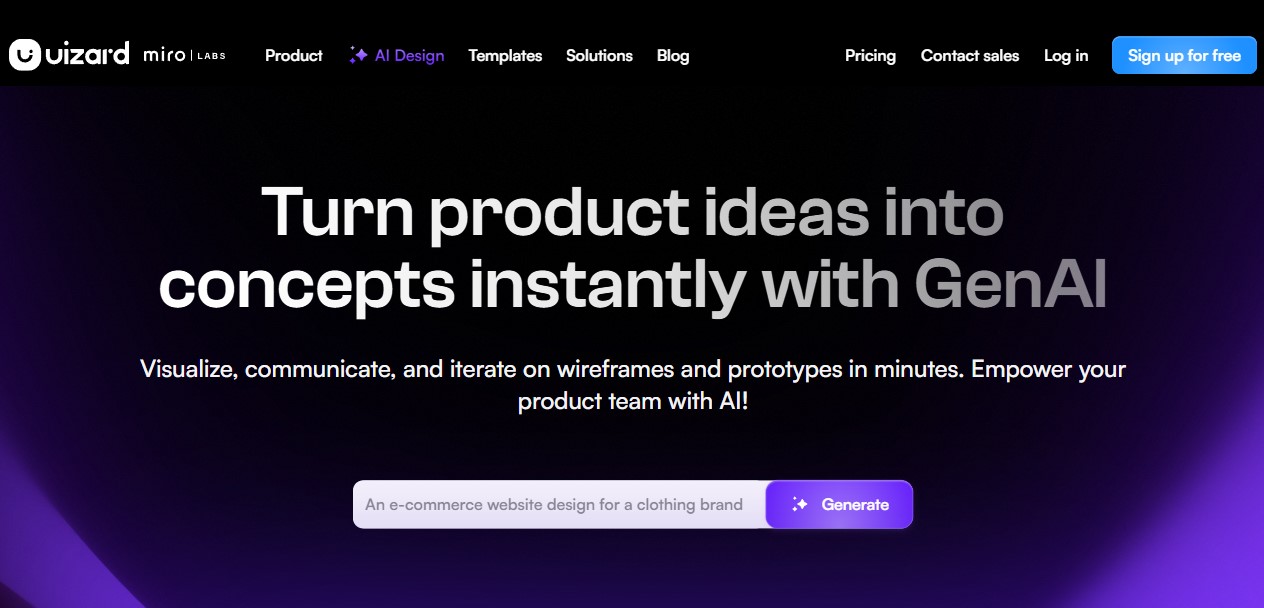
Uizard is a strong AI-assisted mockup application that can turn manually created doodles on sheet into detailed computerized previews. You can just get a image of a wireframe in your diary, and Uizard's AI will convert it into an revisable design with conventional user interface parts. It also has a powerful "Autodesigner" feature that can generate various-view drafts from worded prompts, turning it a flexible instrument for swift prototyping.
Khroma
Khroma is a bespoke AI hue utility for visual artists. You start by deciding on fifty of your favorite tints, and Khroma leverages a machine learning engine to grasp your tastes. It then produces an limitless quantity of special, five-hue color schemes that are customized to your particular preference. It's a excellent method to encounter original and surprising pigment blends that you are statistically likely to adore, emancipating you out of your usual creative routines.